Blogs I love to read:

Wednesday, March 25, 2015

Glima

Something is interfering with me making links, I'll clean this up in the future.

Glima


Iceland is a gorgeous country, certainly the most breath-taking I have ever seen.  From the volcanos, waterfalls, mountains rising from the ocean to perfect pasture dotted with jets of steam and moonscape dotted with glacier - it was amazing.  Everyone was wonderful and friendly.  I ate lamb stew every day, washed down with a malt soda.  

I hadn't actually known wrestling, or Glima, is Iceland's national sport.  Earliest known references to Glima go back to the year 790 A.D.  Thor was the Viking god of wrestling.  The Viking's martial prowess was passed down as entertainment and sport.  Combat skills took several forms like water Glima where competitors would control their opponent under the water until they submitted.

Wikipedia and it's sources have some great information here  

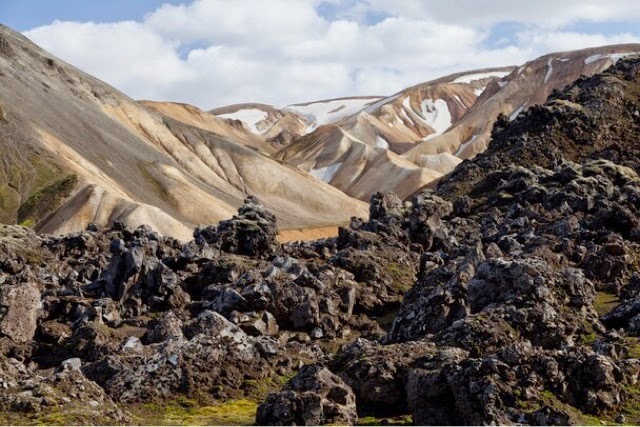
The landscape of Iceland has some areas that look very nice to fall on:


And some that look like no amount of practice falling would have me escape injury:
Some of the water is not for swimming - glacier rivers were cold enough to take my breath away,  yet we ate at a few restaurants that cooked over geothermal vents, and there was a park that boiled eggs in a geothermal pool for the tourists.  We walked across glacier to a mountain peak uncomfortably hot to sit on, where we ate sausage cooked in tin foil buried in volcanic ground.  Water comes from the ground boiling, and signs like this are easily found:
                                     It would be a short swim if you got thrown in.

The one area close to where we stayed had a restaurant and a memorial to a famous Icelandic Glima master.  Videos were playing constantly on a TV in the corner, and I enjoyed watching them.  

Like other arts, Glima has the same human anatomy to work with.  One of the rules, "Don't look at your opponent at all," is much like an exercise my wife will briefly do at the start of her classes.  We are supposed to learn to move by feel in any grappling style, and all arts seem to have some form of drill to train this be it wrestling with the eyes closed, or blindfolded, or in the dark.

Another rule, "Don't land on your opponent," effectively rules out any Makikomi or Uke-Gatame techniques.  Staying upright effectively rules out a ground game - but in a land of boiling water, serrated lava rock, icy oceans and steep high cliffs keeping one's footing is life and death.  Certainly, Judo and another grappling styles have a strategy of staying standing where possible and ground work is a secondary skill.  This helps to emphasize the initial grappling phase.  In Aikido, staying upright is a mandatory strategy as we practice for multiple attackers.  Most Viking weapons like swords and axes are best deployed from standing.  Strategy and philosophy aside, I weigh 220lbs (100kg) and if I went from standing to dropping my full body weight knees first on to someone's chest, I could hurt someone.  So, staying standing is a safer practice for both me and my partner.  (Interesting for me, in practicing to stay standing I can better aim and time a knee to someone's chest).  

The mandatory grip is on the specialized belt that resembles a climbing harness.  This would historically control a scabbard and someone's ability to bring a weapon to bear.  For modern competition, this means no strikes and of course there is no weapon to control.

It is a great exercise that certainly trains some specific and isolated combat skills, but the basic competition Glima is not the brutal fighting style of 1200 years ago.  Combat Glima itself was outlawed in Iceland for 100 years as injures and deaths were too common.  Definitely to Glima's credit, it survived when many other martial arts and entire cultures vanished.  While associated with Thor and the old Viking religion, Glima survived Iceland's conversion to Christianity.  Few other martial arts, maybe Sumo 

http://www.sumotalk.com/history.htm


or Pankration 

http://en.m.wikipedia.org/wiki/Pankration

can claim such a history - and both of these arts have been modified over time.  Glima remains a national sport and taught in schools while Canada's national sport of hockey is being accused of being too injurious even for professional athletes.  

I guess I'm looking at a brutal combat system over a thousand years old that has been changed for safe practice and learning.  As an Aikido student, I am told we are so much less martially than we were.  As a Taijiquan student, I am told the art is so much less martial than it was.  Both of these arts are far, far younger than Glima.  I wonder what Aikido would look like in 1000 years?  Or Taijiquan in several hundred?    

Glima 2005 championship

Archival Glima footage

1932 Glima footage

Enoksen Combat Glima


Saturday, February 28, 2015

The Basics

Going through the history of Aikido language in a very cursory fashion, I realize I was more after an understanding of the art in general.  Really, it looks like different teachers had different ideas of how to teach and what to teach.

All the groups ultimately want to improve the world and the people training in their Aikido.  Everyone claims martial efficacy as a goal.  Takemuso Aiki, the spontaneous creation of Mushin technique, is something pretty well every branch of Aikido, if not every martial art in the world holds up as a goal.

The question is How.

Our English language has 26 letters, 5-7 vowels making 20 separate vowel sounds with a total of 44 sounds, and a pile of grammar rules that many experienced English-only communicators frequently mangle.  Our written language is represented in calligraphy, cursive, printing, and an ever increasing number of font.  We have jargon for specific uses and groups.  We have dictionaries and thesauruses (thesaurasii?).  And, we allow poetic/artistic license anytime any of the rules don't serve us.  But, we start written English with 26 things that can expand eventually to Dick and Jane, Ulysses, a Brief History of Time, and the Bible.  26 things that give us unlimited potential.

When we learn mathematics, we learn the language of the universe.  Physics bears witness to all creation.  The greatest mathematicians still started with 0-9, then learned how to manipulate them.  Ten digits that can be used to predict the weather, the seasons, the depth of the ocean, the power of the atom and the location of interstellar bodies.

The most basic and most powerful computer programs all are derived from 0 and 1.  Like the Yi Jing, Wuji (Nothing) gives birth to Taiji (two things - something and the absence of something), the Four Symbols, the Eight Trigrams, the 64 Hexagrams and so on all the way up to limitless.  Whether it is Yin and Yang, or Binary machine code, two things can eventually lead to potential we have yet to fully realize.

The Founder and his teacher apparently didn't build on basics so much as dropped the equivalent of astrophysics on their students and left them to figure out how to frame their own insights and communicate to their students in turn.  Maybe it's not surprising so many people developed different ideas.

Saturday, February 21, 2015

More of what is in a name - Omote and Ura reconstruction

O Sensei himself was not regimented in how he taught, and apparently neither was Sokaku Takeda.  For the students who followed them, the well formulated methods of teaching that Kano Jigoro successfully advocated for and successfully implemented nation wide for Judo probably influenced everyone to some degree.

(Not necessarily directly, though Kano shared many students with Ueshiba.  I mean more in the same way that BJJ and MMA has forced everyone to consider their ground game.  Kano arrived in the scene with methods that helped students and teachers clearly understand what was being taught and how well the student was progressing.  The promise of understanding within years, instead of decades of chaotic instruction must have had huge repercussions and mass appeal.)

There are separate associations with their own names for techniques.  The wide variety of practice methods out there would seem to indicate that O Sensei's teachings were very different for each student and a wide variety of technical expressions were tolerated.  

Wide varieties in names were also apparently tolerated or eventually came to be.  For example, a very rudimentary wrist twist is known as Kote Mawashi, Nikajo, and Nikyo in Aikido alone.  It exists in some form in every martial art I have every seen demonstrated, with many different names.


One technique I was required to learn was called both Ikkyo and Nikyo Omote.  I never learned how to distinguish which was which.  This picture is labelled Ikkyo below, and this is the technique I am referring to.


I learned this next one as a Wakigatame.  Someone asked Sensei if it was Gokyo, and I remember him saying, "No."  Another higher ranked direct student of O Sensei I met a few years later said, "Yes."  Here is a picture of Shioda Sensei doing the same technique, labelled Nikyo (by an American dojo - Shioda used Nikajo to my knowledge, and maybe never used Nikajo for this movement.  The point is how badly we communicate within our collective art).  It appears in Daito Ryu, but I don't recall which catalogue or what it's name is.


As people were coming to train with O Sensei with a wide background in traditional martial arts, many techniques in the Aikido syllabus already had multiple names.  The student could fall back on terms stemming from guarded family arts, insular clan arts, as well as exposure to the martial arts of other countries including Okinawa, China and Korean.  If O Sensei didn't provide the name, the student already had a framework for labeling the technique.  Look up words like "walk," "stand," or "hold" in an English thesaurus - I am glad to have only a handful of Japanese terms for these subjects!

Names eventually became "correct" as declarations of allegiance to political bodies especially in the West.  Language barriers probably played a role.

To a native Japanese martial artist, the names might very well be completely interchangeable - most of the Japanese technical terms like Kote Mawashi are very rudimentary and describe the movement, offering no deeper spiritual meaning.  

If that is the case, the fault isn't really with the Japanese labels but rather in Caucasian monolingual nobodies like myself who are trying to learn "Thee Right Way."

Friday, February 13, 2015

From the Sword

I have been told many times that my style of Aikido comes from sword work (not by Sensei, and I think it isn't a fully true statement and maybe becoming less true with time).

The problem is, I had little sword work coming up compared to some associations (more than some, but not a lot).  So, I was left in pre-YouTube and Facebook days to watch movies and read books.  Kata practice also left me with a sense of an extended and protracted contest.  There are other fighting styles from different cultures who try multiple rapid cuts, but the theory is most of those cuts are going to fail to do much.  Most Japanese arts seem to try to be minimalist - one move, one kill.

I was raised on Darth Vader, Obi Wan Kenobi, and Luke Skywalker.  I was blown away by The Princess Bride.  I caught Revenge of the Ninja in the theatre as a new release.  Choreography has since become more lavish, wire work more common, computer graphics and clever editing common place.  More Crouching Tiger, more Zorro, more Kill Bill, more Matrix.

This Link shows some Iaido cutting practice.  My understanding is each practice target device is supposed to have roughly the same feel and offer the same resistance as a human arm, leg, or neck.  The wall shaped device would then offer the same resistance as a vertical cut through the torso I guess.  

Each movement is a single, simple, lethal, fight stopping movement.  I watch the final fight scene from Sanjuro, or when I watch Sword of Doom, this is what I see.  There are no blocks, no handsprings, no flips, and it's much less fun and sexy.  It looks quick and lethally simple.  When I watch these scenes with non-martial artists I get told it looks fake (and, these are movies so they are fake) - but the same people don't make that comment about Jackie Chan.  Maybe the idea that we really are that fragile is unsettling.

I remember Sensei saying empty handed Shomenuchi was "Two Kills."  Raise the hand - finished.  Lower the hand - finished.  It's the same movement as Tohei's Ikkyo Undo, as Shioda's Kokyu Ho #1, as Tomiki's Atemi Waza.

This was one idea that I tried to work on leading up to my last test - no meaningless movement, each moment in time an opportunity to strike, lock, or throw.  One move, one finish.

Tuesday, December 9, 2014

My mom's gingerbread recipe that I use for houses and cookies

I owe people an apology I guess.  I gave all props to Alton Brown for his sugar cookie recipe as I used it for decorating a gingerbread house.  From the traffic I get here, I think people are looking for Alton Brown's recipe.  To my knowledge, he hasn't published one (though I am sure it would be great).

This is the recipe I usually make:

1 cup of sugar
1 cup of butter, left at room temperature for a few hours.  Not melted in the microwave, this changes the consistency.  My wife swears margarine is unhealthy, so I stopped using it.  But, margarine tends to make a harder cookie if you find the dough too crumby for a gingerbread house.  I definitely use butter for tree ornaments with no problem.

Beat the two together until fully combined.

For eating:
1 tsp of ground cloves
2 tsp of powdered ginger
1 tsp of cinnamon
1 tsp of salt

Mix well and fully combine again.  I just leave this mixture in the mixing bowl.

For a gingerbread house, the dough is being used for it's aroma as much as anything.  I double the ginger, cinnamon and cloves.

I use a 2cup Pyrex measuring cup for the next step.
2/3 c. hot strong coffee
2/3 c. molasses
Stir the molasses and coffee together until fully combined.  Then add this to the butter, sugar and spice mixture and mix further.

In a separate mixing bowl, combine
4-3/4c regular flour
1 tsp. soda
I like the dough better when I have sifted it.

I used to add a handful of flour at a time in the mixing bowl, then mix, then add more flour, until I had a solid dough.  I now have a wonderful power mixer with a dough hook, and it works just fine to add a little flour at a time while leaving the dough mixing.

Wrap in saran or put the dough in an airtight container, then chill it for a few hours (though I usually leave it overnight in the fridge).

When ready to bake, take a chunk of dough and knead it until it isn't as stiff and feels uniform.

Set oven to 350.   

I roll the dough out on Baker's Parchment - much easier to pick up and put on the cookie sheet.  No need to grease the sheet either.

Depending in the thickness of the dough, 17 minutes is usually enough.

Thursday, December 4, 2014

Roman Sankyo


So, the picture is from a museum in Florence, Italy.  It is interesting for me because if I saw a student doing this variation of Sankyo, I would correct them for doing it "wrong."  I can expand my understanding of what Sankyo can be with this example, and that gives me some freedom.

On the other hand, no one is saying O Sensei lived 2000 years ago, or that he ever saw Rome, or that he enjoyed public nude wrestling.  There is no saying Roman soldiers taught Japanese martial artists. There is no reason to see two similar ideas and force a direct correlation.


Saturday, November 29, 2014

Aiki-Truthiness


"Did you hear the story about O Sensei on the train?  When he talked down the angry drunk man?"   I groaned a little inside.  This comment was from a senior practitioner.

The story is from Terry Dobson.  He was on a train in Japan when an angry drunk man started to frighten people.  Dobson was ready to respond with his size and martial prowess when an old man walked up and talked the angry drunk down.  The frightening man quickly collapsed into tears, the situation was immediately diffused without violence, and Dobson appeared to have a moment of enlightenment.

The old man on the train sounds like someone who was fearless, and compassionate.  He sounds like someone we need to have more of in the world today.  This old man on a train in Japan had an influence on Dobson's Aikido, and the story resonates with many people in Aikido today.

It just never was O Sensei.  Dodson gives no indication he even knows who the old man was.

I only heard one story about O Sensei on a train, and it was in a book of Shirata Rinjiro's translated by John Stevens.  O Sensei ordered a stranger who was sitting quietly on a train off.  O Sensei, according to the students, who told the story to the translator who wrote it down and submitted it to the publisher, told his students it was because the man was a thief.  So, I have several degrees of separation from this one story.

I spent a few years having read everything (bloody little) with O Sensei's name or a direct student's name in the title (if it has been translated into English - a huge barrier I regret).  I wish this story was the only one of it's kind.  When I come across a quote I never heard before, I don't get excited.  I get cynical.


Like this image from Shihan Essence.  There are several otherwise beautiful posters that they have fluffed a bit.  "Life and Death are decided in an instant" maybe became translated as "Winners and Losers are decided in a flash."  In asking the people running the site, this was a translation of Shioda Kancho paraphrasing Morihei Ueshiba, then misattributed as Morihei Ueshiba himself directly.  There are many quotes from other sources where O Sensei asked us not to focus on the Good and Bad of our fellow man, or to not focus on Winning and Losing.


Morihei Ueshiba is well known as a devote Shinto practitioner, but in some posters like this Ueshiba is quoted as though he worshipped the Judeo-Christian God.  I believe the original might have referred to Kami, and a number of similar quotes probably refer to "The Universe." 

It is hard to blame the site, as O Sensei wrote little, his image was deliberately modified for marketing purposes, and many students have gone on to spread stories they think should be true or they feel is true.  Their next generation of students in turn respond with further truthiness, misguided loyalty or misplaced trust.  As Aikido rapidly became multinational, multiple languages seem to be in play.  What was maybe in Japanese gets translated into Russian is then translated to Spanish, and then to English or whatever.  The translations are playing the Telephone Game with our art.

It shouldn't be so easy to confuse a generation of students. 


Why do I as a Christian get the joke?  Because I cared enough about my religion to read, and listen to people who deserved to be listened to.  I questioned what I heard, and I corroborated what I read, heard, and believed.  I challenged my beliefs, and I researched them.